運命、カルマ、そして自己変革・クリヤーヨーガの光が照らす人生の道
vibration
VIBRATION WORLD | 現代陰陽師 | スピリチュアルサイト
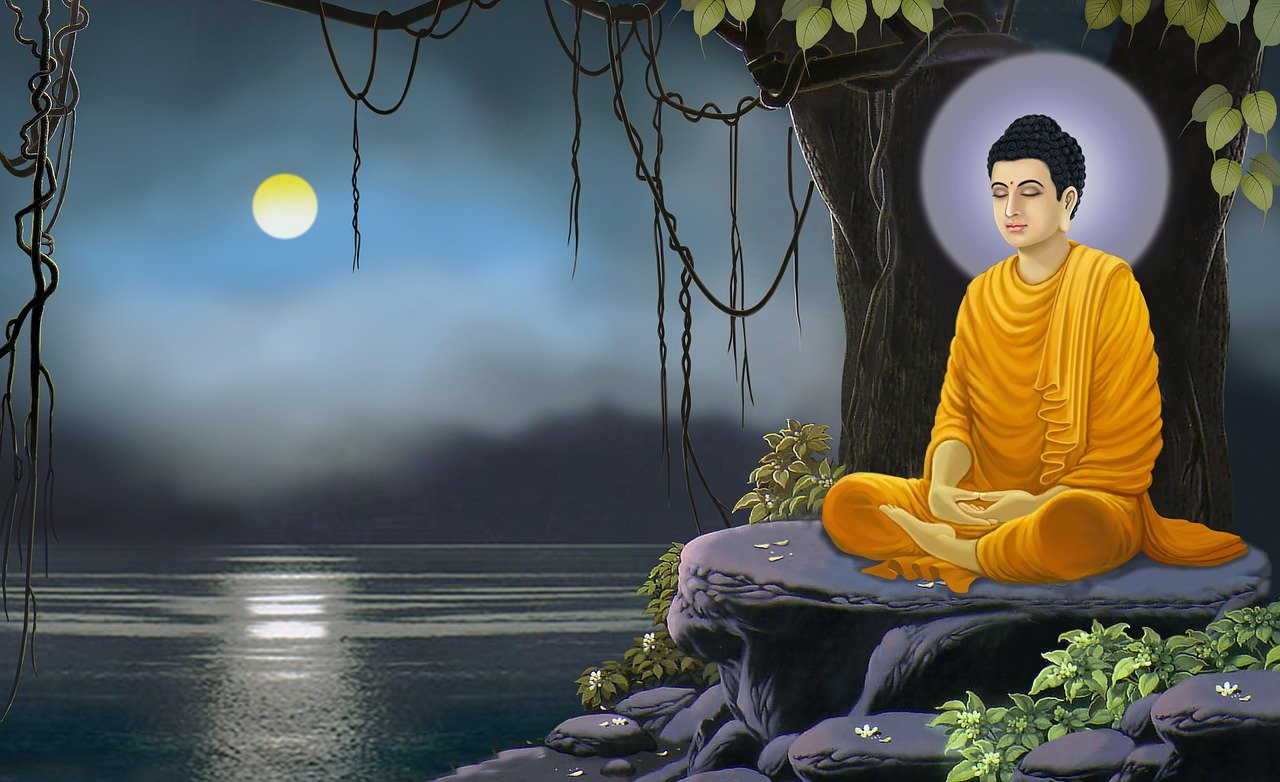
"Old age" can be said to be the final chapter of life. In today's society, old age is often associated with negative images such as physical and mental weakness, loneliness, and financial insecurity. But is old age really just a time of hardship? About 2,500 years ago, a sage born in a far-eastern country, Gautama Siddhartha, later Shakyamuni Buddha, showed us through his life and teachings the sufferings of life and the way to overcome them. Hidden in his teachings is the profound wisdom to live a rich old age for those of us who face the changing self and environment as we enter the autumn of our lives.
Buddha was born around 563 BC in Lumbini, in present-day Nepal. Although he was born into a royal family, he faced the inevitable anguish of birth, old age, illness, and death, and was ordained in search of a solution. After rigorous training, he attained enlightenment and became a Buddha. His teachings were based on egalitarianism and compassion, preaching that all beings are impermanent, that suffering is caused by attachment, and pointed the way to overcoming them (nirvana).
There is an anecdote that one day an old man with white hair visited the Buddha and asked him about how to live in old age. "Sage," the man asked, "the autumn of life has come, and the body is weakened, and it is not the same as it was when I was young, how can I live my old age peacefully?" The Buddha replied with a smile. "Aging is inevitable, but depending on how you feel about it, you can turn it into a rich one, and if you find the little happiness that you didn't realize when you were younger, and if you remember to be grateful, you will always be at peace."
As symbolized by this phrase, Buddhism regards old age not as a mere period of decline, but as a natural process of life, an opportunity for further spiritual growth through suffering and hardship. Facing old age, illness, and death is a phenomenon of impermanence experienced by all living beings. Buddhism teaches us to accept these phenomena and to maintain inner peace and harmony.
In this article, we will introduce 10 perspectives on the life of the Buddha, especially his later years, his teachings, and the subsequent history of the Buddhist cult, and explore his wisdom by introducing 10 perspectives on "the rich old age of the Buddha and his mind."
The life of the Buddha in his later years embodied the very teachings he preached. Even as he grew older, he continued to live a frugal and minimal life. The symbol of this is "alms". Alms is the act of a monk visiting people's homes in search of food, which is a traditional Buddhist practice of providing believers with the opportunity to "fuse." This act shows a way of life that does not cling to material things more than necessary. Even in old age, letting go of attachment to material wealth and social status and trying to live a simple life that knows enough is a great help in maintaining peace of mind. The Buddha's simple daily life conveys to us the message that inner peace is true abundance.
The last years of Buddha's life were a time when his teachings evolved further and matured. In particular, in his later sermons, he repeatedly emphasized the "Three Dharma Seals," namely, the impermanence of all actions (everything keeps changing), the non-self of the laws (the absence of a fixed self), and nirvana and tranquility (the elimination of disturbing thoughts and the attainment of the state of enlightenment). In the face of the changes of his own body aging and declining health, the Buddha became more deeply aware of the psychology of the teachings of impermanence. He told his disciples, "All beings are changing, and that's why it's important to let go of attachments and live in the present moment." The teaching of No-Self also encourages us to let go of our attachment to the image of ourselves and our abilities that are being lost due to old age, and to look at life from a larger perspective. These teachings are the basis for embracing the changes in the self in old age and finding inner peace.
Buddha's relationship with his disciples in his old age became an important foundation for his teachings to be passed on to the next generation. Ananda, one of his closest disciples, played a particularly important role in the Buddha's later years. The famous phrase "A good friend is all about practice" is a reference to Ananda's statement that "having a good friend or good company is equal to half of the practice," to which the Buddha replied, "Having a good friend is not half of the practice, but all of it." This shows how important it is to have relationships that support and enhance each other in life and practice. As the Buddha entered old age, he increased the tutoring of individual disciples according to their personalities and abilities. Even in old age, cherishing and supporting each other's connections with family, friends, and local communities is essential for emotional well-being.
Even in his old age, Buddha continued to interact with people from all walks of life. His teachings were widely accepted, from royalty and aristocracy to commoners and even outcaste people in the caste system. Buddha preached that all people, regardless of caste or status, could be liberated through the teachings of Buddhism, and his egalitarian stance gave hope to many. He also encouraged monks to engage directly with society through almsgiving, building trust with his followers. In addition, it emphasized ethical values such as defamity, compassion, and honesty, and aimed to improve the ethical quality of society as a whole. Even in old age, it is important to maintain a connection with society and to have compassion and compassion for others in order to prevent isolation and find purpose in life.
The last years of Buddha's life were also a time of frequent physical pain. Although he suffered a serious illness, especially during his last journey, he accepted this pain as part of his practice and encouraged his disciples to do the same. This is an illustrative example of the understanding and acceptance of suffering, which is a fundamental principle of Buddhism. By embracing pain rather than trying to avoid it, we have shown the way to let go of our attachment to pain itself. The Buddha also avoided both extreme greed for money and extravagance, encouraging a moderate and balanced "middle way" life. This is also an important teaching for maintaining physical health. It teaches us the importance of accepting reality and taking a middle-way approach to dealing with changes and discomforts in old age without being overly afraid or rejecting.
The Buddha's old age was a time when his spiritual growth and evolution of enlightenment stood out especially. By deeply observing the changes in his own aging and illness, he gained a deeper understanding of the teachings of impermanence and selflessness. He emphasized that the "self" is not a permanent entity, and that true liberation and peace can be attained by letting go of attachment to the self. This deep self-understanding and freedom from attachment has progressed through the practice of meditation. Through meditation, Buddha maintained his mental tranquility and dealt with physical pain. Meditation is not just relaxation, but a means of deep insight into the psychology of the self and the world through introspection. While retirement can be difficult to physically perform, it can also be a valuable time for inner exploration and spirituality. Meditation or introspection is an important practice to fill old age with mental abundance.
The Buddha's sermons in his old age contained much of the content that could be said to be the culmination of his teachings. In particular, his last teaching, the Nirvana Sutra, which delves deeply into the Three Seals and reiterates the importance of embracing impermanence, letting go of attachments, and finding inner peace. In Buddhism, it is important to deepen our understanding of impermanence and gain peace of mind through the inevitable four sufferings of life, old age, sickness, and death, especially through the natural process of aging. In addition, the episode of Angulimara, a sinner who once murdered many people, was converted and ordained by the mercy of the Buddha suggests that any person with a past can change and start a new life even in old age. The words that Buddha preached to his disciples just before his death, "Let yourself be a lamp and a refuge yourself," show the importance of looking inward and maintaining peace of mind with one's own strength, regardless of external circumstances, even in old age.
One of the most symbolic events in Buddha's life is his final journey and death. At the age of 80, the Buddha embarked on his final journey from Rajagaha to Kushinagara with his disciples. During this journey, he became seriously ill and endured physical pain, but continued to preach his teachings with the last of his strength. He showed the inevitable reality of impermanence in the form of illness and reaffirmed the psychology of impermanence to his disciples. Arriving at Kushinagara, the Buddha lay down under a saara tree and preached his last teachings to his disciples. His last words, "Impermanence, do not neglect to complete your practice," symbolize the importance of accepting the changing reality of everything and continuing to strive for personal growth and enlightenment. The Buddha's death means physical death, but at the same time it shows that his teachings live on forever. This seems to teach us the value of accepting the end of life as part of impermanence and passing on our spiritual heritage and teachings to the next generation, rather than fearing physical decay and death in old age.
After the Buddha's death, his teachings and the management of the Buddhist order (sangha) were taken over by his disciples. The first important event was the first rally. After the Buddha's death, his disciples gathered in Rajagaha to review and record the Buddha's teachings (sutras) and precepts (laws). This was done with the cooperation of many disciples, including the chanting of the teachings that Ananda had heard, and the Mahākāśyapa organizing the precepts. This laid the foundation for the Buddha's teachings to be passed on accurately and systematically to future generations. In addition, the disciples were sent to various places and energetically engaged in missionary activities. With the support of influential figures such as King Ashoka, Buddhism spread throughout India and throughout Asia. The history of the inheritance of this teaching and the development of the Sangha shows that beyond the death of the individual, ideas and wisdom continue to live on through organizations and communities. It teaches us the importance of passing on our experiences and knowledge to the next generation and playing a role as a member of the community in old age.
The wisdom contained in the Buddha's teachings, especially those of his later years, continues to have a profound impact on modern society for more than 2,500 years. The teachings of impermanence teach us the importance of having an open mind and adaptability in the face of unpredictable changes and uncertainties in modern society. It guides you to fearlessly embrace change in all aspects of your work, your relationships, and your body and mind. The teaching of no-self helps us move away from self-centeredness and attachment to excessive self-esteem and cultivate a spirit of empathy and cooperation with others. This is the foundation for valuing connections with others and having a grateful heart in old age, when people tend to be isolated. The teachings of Nirvana Tranquility, or overcoming suffering and attaining peace of mind, provide concrete ways (meditation, mindfulness, etc.) to look inward and maintain inner tranquility for those of us who face stressful and anxious situations today. In addition, ethical teachings such as nonviolence and compassion have universal values for building a better society as ethical norms of conduct not only for individuals but also for society as a whole. We reframe the stage of old age as not just an end, but a rich opportunity to embrace impermanence, deepen our inner self, connect with others, and pursue spiritual peace. The Buddha's teachings will be a powerful compass for this.
The life and teachings of Gautama Siddhartha, aka Buddha, especially in his later years, have the potential to profoundly change our perception of the stage of life called old age. While accepting old age as inevitable, we must not see it as a mere period of decline or hardship, but rather as a precious opportunity to look deeply within ourselves, enhance our spirituality, and find inner peace. This is what the Buddha's teachings suggest to us of a "rich old age."
The wisdom of accepting impermanence and living with change. A way of life that lets go of material attachments and knows enough. A relationship that values connections with others and supports each other. An attitude of accepting changes and disorders in the body and walking the middle path. The practice of deepening one's inner self through meditation and introspection. And to use oneself as a light and rely on one's own inner strength. These teachings have universal value across time and culture, and provide immense suggestions and comfort to those of us living in the present day, especially those who are entering a new stage of old age.
A prosperous old age is a journey to establish inner peace of oneself, without worrying about external circumstances or physical conditions. The Buddha's teachings will be a solid compass and guide us on our journey. Deeply grateful for the wisdom of the Buddha, who found the path to enlightenment and a rich way of life in the midst of the inevitable suffering of life, old age, illness and death, and making use of it in our daily lives and in the coming old age is the best offering we can make in the present day, and it can be said that it is a way of life that values ourselves.