願望実現を加速!エネルギーを高め、心身を整える7つのデトックス
vibration
VIBRATION WORLD | 現代陰陽師 | スピリチュアルサイト
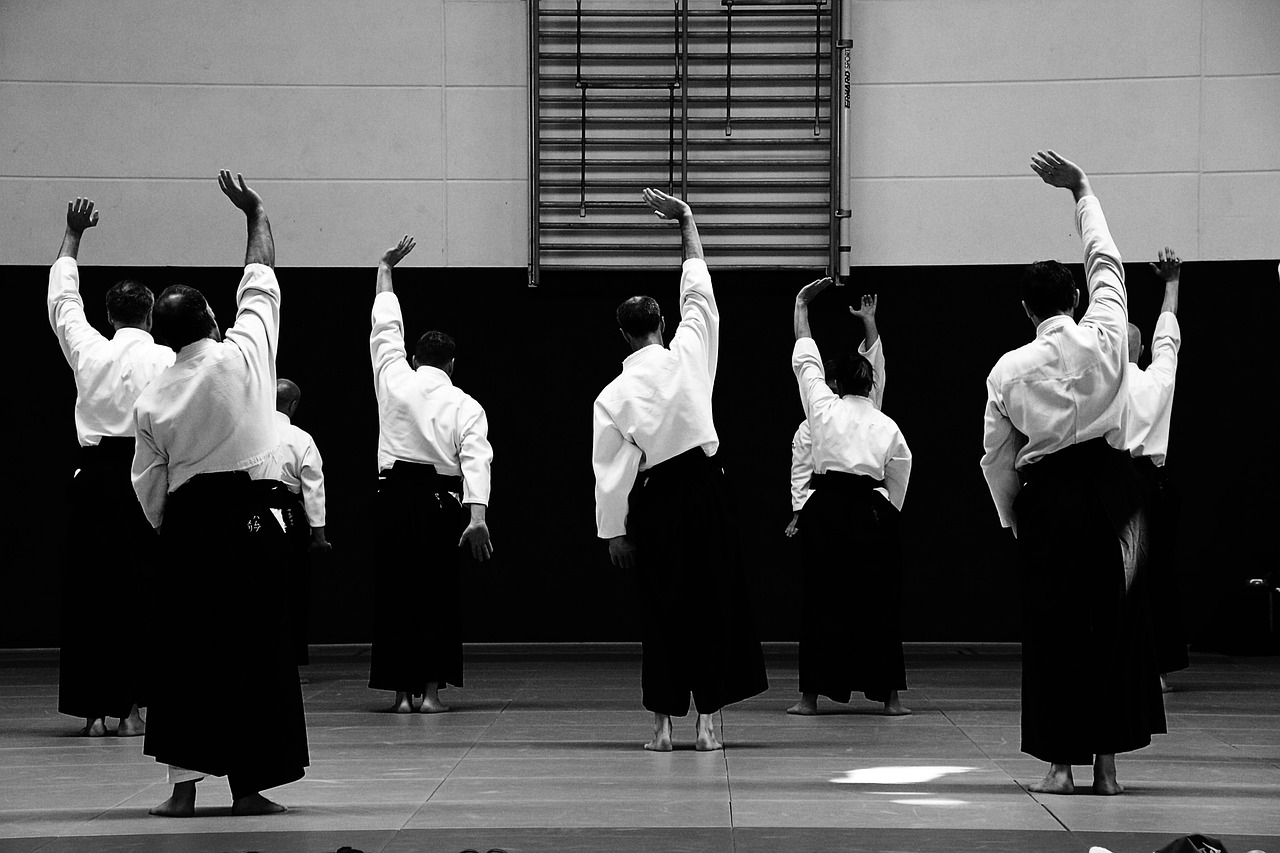
Daito-ryu Aiki Jitsu is not just a system of fighting techniques, but at its core, the philosophy of aiming for deep spiritual cultivation and human development is alive and well.
This martial art, which has been cultivated over a long history and tradition, has not lost its influence in modern society and continues to provide opportunities for self-growth for many people.
Daito-ryu Aiki Jutsu, also known as the origin of Aikido, became widely known in the Meiji era by a man named Sokaku Takeda, and his technical system had a great influence on various later martial arts.
We will delve deeply into the origins, historical background, technical characteristics, philosophical aspects, and relationship of Daito-ryu Aiki Jiu-Jitsu with modern society, revealing its appeal and contemporary significance.
The origins of Daito-ryu Aiki Jitsu are said to date back more than 900 years. Its origins were sought by Silla Saburo Minamoto Yoshimitsu, a descendant of Emperor Seiwa, and were refined as practical fighting techniques by samurai based in the Kanto region. Silla Saburo Minamoto Yoshimitsu was known for his outstanding martial arts talent and strategic acumen, and the martial arts that he is said to have founded branched out into various schools in later generations. Among them, especially noteworthy is the fact that it was inherited and developed by the Takeda family.
During the Warring States period, the Takeda family produced outstanding warlords and military strategists, and their military power roared throughout the country. The martial arts of the Takeda family evolved into something more practical and sophisticated through their hands-on combat experience on the battlefield. The martial arts of the Takeda family were the foundation of the later Daito-ryu Aiki Jujutsu, and their technical system contained a philosophy that emphasized harmony between mind and body that went beyond mere fighting techniques. The Takeda family's family motto strongly engraved the spirit of "both literature and martial arts," and the importance of not only training in martial arts but also refining one's studies and culture was preached 。
After the fall of the Takeda family, the techniques of Daito-ryu were not interrupted and passed down as a secret tradition among the high-ranking samurai of the Aizu domain. The Aizu clan was a clan that valued the Bushido spirit, and its martial arts training was very strict. The Aizu clan warriors saw the advanced techniques of Daito-ryu not only as a means of warfare, but also as a means of self-discipline and a path of spiritual cultivation, and worked hard to pass it on. During this period, Daito-ryu came to combine a more sophisticated technical system with a deep philosophical background.
Then, in the Meiji era, an outstanding figure named Sokaku Takeda appears. Sokaku Takeda learned the techniques of Daito-ryu, which had been passed down as a secret tradition in the Aizu Domain, and worked to organize and systematize them.
Based on ancient martial arts, he built his own system of techniques with the concept of "aiki" at the center. Sokaku Takeda traveled around the country, passing on his skills to many people and contributing to the widespread recognition of Daito-ryu Aiki Jujutsu. Thanks to his efforts, Daito-ryu saw the light of day again, and its influence would cause a huge ripple in the martial arts world later on.
The most distinctive feature of Daito-ryu Aiki Jitsu and what sets it apart from other martial arts is the concept of Aiki, which is deeply rooted in its technical system. Aiki is a technique that skillfully uses the movement of the opponent and the flow of force to dominate the opponent with minimal force, and is not just a comparison of strength, but an advanced technique that uses mechanical principles and the shift of the opponent's center of gravity. This technique requires not only martial arts elements, but also knowledge of body manipulation and the ability to decipher the psychology of the opponent.
Daito-ryu Aiki Jiu-Jitsu is not limited to the mere acquisition of techniques, but also places great emphasis on the aspect of spiritual practice. This philosophy of martial arts does not simply aim to defeat the opponent, but also to look deeply within oneself and enhance one's humanity. In the teachings of Daito-ryu, the "esoteric technique," which refers to the ultimate form of technique, is not only a mere expression of perfection of the technique, but also a deep spirituality and human understanding are indispensable.
Through training, emphasis is placed on the process of facing one's inner weaknesses and challenges and overcoming them. It is believed that through this process, spiritual growth is promoted and the vessel as a human being is polished.
The philosophy of "both literature and martial arts" is also at the root of this, and it is explained that it is important to play a role in academics, culture, and society at the same time as training in martial arts. The purpose of Daito-ryu training is not only to cultivate a strong body, but also to cultivate a rich spirit and to cultivate human beings who can contribute to society.
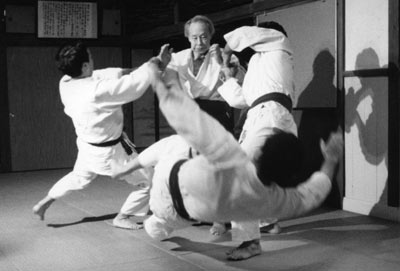
After the chaotic period after World War II, Daito-ryu Aiki Jiu-Jitsu expanded its influence not only in Japan but also overseas.
Since the beginning of the 2000s, it has spread rapidly, especially in Asia and North America, and now dojos and organizations are active in many countries and regions. This spread is being driven by the use of the Internet and social media.
Through video platforms and online seminars, Daito-ryu's techniques and philosophies have been distributed around the world, making it possible to learn remotely. As a result, many people have been able to transcend language and cultural barriers and come into contact with the charm of Daito-ryu.
In addition, international martial arts competitions and exchange events are held regularly, and activities to deepen technical exchanges and friendships between different cultures are actively carried out.
Through these activities, Daito-ryu goes beyond the framework of mere martial arts and also plays a role as a bridge for cultural exchange. In addition, collaboration with educational institutions also plays an important role in the spread of Daito-ryu.
It has been adopted by many universities and schools as part of their martial arts education programs, and the philosophy and techniques of Daito-ryu are passed on to young people. As a result, the development of the next generation of instructors is progressing, and contributions to martial arts education as part of Japan's traditional culture can be seen.
Modern society has become highly complex, and many people are prone to losing their mental and physical balance in a stressful and competitive society. In this situation, Daito-ryu Aiki Jitsu can be an effective means of restoring harmony between mind and body and promoting self-growth.
Through martial arts training, you will not only develop physical strength, but also concentration, perseverance, and mental strength to face difficulties.
Also, the concept of "aiki" in Daito-ryu teaches us not to rely on force, but to observe the opponent's movements well and deal with them in the most efficient way.
It can be said that this is universal wisdom that can be applied not only in the world of martial arts, but also in business and relationships.
The Daito-ryu philosophy encourages us to look deeply inside ourselves and deepen our self-understanding. Through this process, your self-esteem will increase and you will be able to live a richer life.
Daito-ryu Aiki Jiu-Jitsu has a unique presence in Japan's martial arts culture due to its long history and profound philosophy. It is not just a system of combat techniques, but in the background there is a strong sense of values that pursue spiritual cultivation and the improvement of humanity.
Even in modern society, it is expanding and evolving in a new way through multicultural interaction and the use of technology. Daito-ryu Aiki Jiu-Jitsu will continue to be loved by a wide range of people, and its wisdom and techniques will be passed on to new generations.
Its history, technological system, philosophy, and connection to modern society can teach us a lot. The spirit of this martial art may give us hints on how to solve the various problems that modern society is facing.