
A thorough explanation of the characteristics and personalities of the Pleiades! From appearance, mission, and love outlook to diagnosis
vibration
VIBRATION WORLD | 現代陰陽師 | スピリチュアルサイト

George Adamski is widely known for his singular presence in the field of UFO research and space philosophy in the mid-20th century.
He was a pioneer of the "Contactee" movement, which professed direct contact with extraterrestrial life, and his activities were influenced by spiritual philosophy, scientific debate, and

It encompasses the cultural influences associated with UFOs and has been named to this day. Adamski's story goes beyond mere UFO research and offers an intriguing case study that is intricately intertwined with multiple elements such as humanity's view of the universe, spiritual exploration, and social unrest during the Cold War.
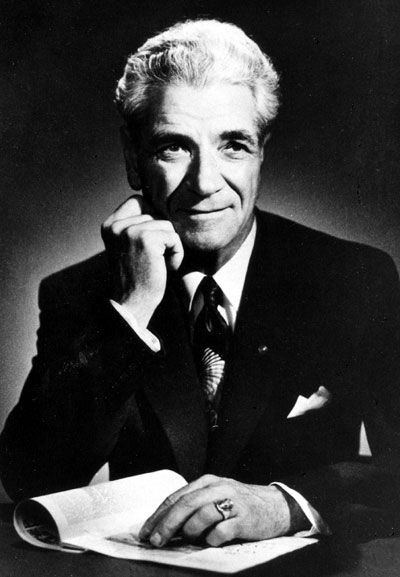
On April 17, 1891, George Adamski was born in the former German Imperial Poland. Immigrating to the United States with his family as a child and becoming a citizen, Adamski developed a deep interest in religion and philosophy in the 1920s.
During this period, in the course of his quest for knowledge, he formed an organization called the "Royal Order of Tibet" and developed religious activities to explore the nature of the universe and life.

It can be said that this activity laid the foundation for the later construction of Adamski's philosophy of the universe.
He was not bound by traditional religious views, but deepened his consideration of the significance of human existence and spiritual evolution from a cosmic perspective, and formed his own system of thought.

Adamski's name became widely known in the 1950s. He claimed to have communicated directly with extraterrestrial beings and shared his detailed experiences in many books and lectures.
Adamski's testimony stimulated curiosity and sparked great debate in a society where science and technology were advancing rapidly at the time and the anxieties of the Cold War era were mixed.

In 1952, an incident documenting an encounter with a Venusian in the Mojave Desert in California was widely reported.
At this time, the photograph of the disc-shaped spacecraft that he is said to have taken became a symbolic image in UFO research of the same era as the "Adamski type", and aroused the imagination of many people about space.
Adamski's depiction of aliens is not just an alien being, but an advanced civilization that brings peace and harmony to humanity, and it strongly appealed to the spiritual desires and hopes of the people of that time.
According to Adamski, on November 20, 1952, he and his friends visited the Mojave Desert when they encountered a spacecraft flying from Venus.
He said he had a telepathic conversation with an alien who had descended from the spaceship—a "Space Brothers," as he called it—and that the alien conveyed his deep concern about Earth's nuclear weapons.

This experience inspired Adamski to speak out about peace and harmony on Earth, and by proclaiming the existence of aliens, he aimed to raise a sense of crisis in humanity and seek a path to a better future.
These experiences are documented in detail in his books "Flying Saucer Observations" and "Flying Saucer Rides", which were read by many people around the world and further increased interest in Adamski's claims.

Adamski's photographs of the Venusian spacecraft attracted a great deal of interest from UFO experts and researchers around the world at the time due to their unique structure and details.
However, at the same time, strong doubts were cast about its authenticity. Some scientists and skeptics have pointed out that Adamski's photo may be a model or a trick, which caused controversy.
This critical opinion was one of the factors that made Adamski's work socially recognized, and his name will never be forgotten in the history of UFO research.
Adamski's cosmic philosophy is characterized by a unique worldview that integrates science, religion, and spirituality, and focuses on the concepts of "harmony and oneness." His cosmological philosophy emphasizes that the universe as a whole is connected to the cycle of life, and that human beings are also part of it.
Adamski argued that the evolved aliens were carrying a message to earthlings that reminded them of the importance of love and peace.
They also believed that these aliens were on a mission to guide humans from destroying the Earth in a nuclear war.
Adamski's ideas were deeply connected to the social context of the time. In the Cold War, an era when the threat of nuclear war became a reality, his alien message served to give people hope and arouse their desire for peace.
His philosophy of the universe went beyond mere proof of the existence of UFOs, but pointed to the significance of human existence and hope for the future, and resonated with many people.
In particular, his book, known as The Science of Life, is structured as a course of study aimed at the spiritual evolution of the individual, based on the knowledge gained from contact with aliens.
The "deepening of self-understanding" and "expansion of consciousness" that he preached were not limited to mere religious or occult ideas, but were philosophical and spiritual explorations of the laws of the universe and the role of humanity.
Adamski's ideas have something in common with modern self-development and exploration of the spiritual world, and his legacy is not limited to the realm of mere UFO research, but is also appreciated as an idea that promotes the spiritual growth of human beings.
While Adamski's theories and photographs had many followers, there were also a number of critics.

Many experts have argued that the UFO images he released and the alien dialogue he claims lacked scientific validity, and a cynical view of his activities has spread. Still, Adamski's writings were subscribed to by millions of readers, and UFO religions and emerging religious movements influenced by his philosophies and ideas emerged.
His ideas permeated society in various ways and continued to have a profound impact in the fields of UFO research and spiritual exploration.
More notably, his work coincided with the space race and the geopolitical debate on nuclear weapons during the Cold War.
At a time when humanity was beginning to expand into space, Adamski's message of aliens responded to the anxieties, expectations, and spiritual hunger of many. Against this background, it can be said that his activities were not limited to mere UFO research, but also influenced the culture and social conditions of the time.
Adamski's work provides an important case study for understanding the UFO phenomenon as a social phenomenon.
George Adamski remained active until his death from a heart attack on April 23, 1965. Even after his death, his influence has not diminished, and he maintains a certain presence in the field of UFO research and space philosophy.
Today, attempts to re-examine the veracity of his claims and research books that delve deeper into his ideas continue to be published, and many enthusiasts and researchers are listening to the message he left behind.

Adamski's research not only examines the phenomena of the past, but also provides important implications for contemporary UFO research and spiritual exploration.
Although it is sometimes regarded by some as megalomania or science fiction, Adamski's concepts such as "harmony with the universe" and "the evolution of humanity as a whole" still have a presence as universal themes in modern society.
His ideas offer new perspectives on the various challenges facing modern society, such as environmental issues, nuclear weapons issues, and the future of humanity.
He will continue to be remembered for future generations as the person who laid the important starting point for the dawn of UFO research and provided an opportunity for humanity to look at themselves from a cosmic perspective beyond the limited framework of the Earth.
Adamski's legacy continues to provide important implications not only for the history of UFO research, but also for the evolution of human consciousness and our perception of the universe.
His story teaches us the importance of looking inward and seeking harmony with the universe.