新宿歌舞伎町の新宿総鎮守・花園神社:芸能の聖地、都会に息づく信仰
vibration
VIBRATION WORLD | 現代陰陽師 | スピリチュアルサイト
Since ancient times, Ise has been praised as a "divine country" and has been nurtured by rich nature and history. The area is home to Ise Jingu Shrine, which supports the spiritual culture of Japan, and has attracted reverent faith from the people as a place where many gods live. This time, I visited Ise Province, which was once a great country on the Tokaido, located in the eastern part of present-day Mie Prefecture, and embarked on a journey to visit shrines dedicated to the gods in order to experience the essence of Ise Province.
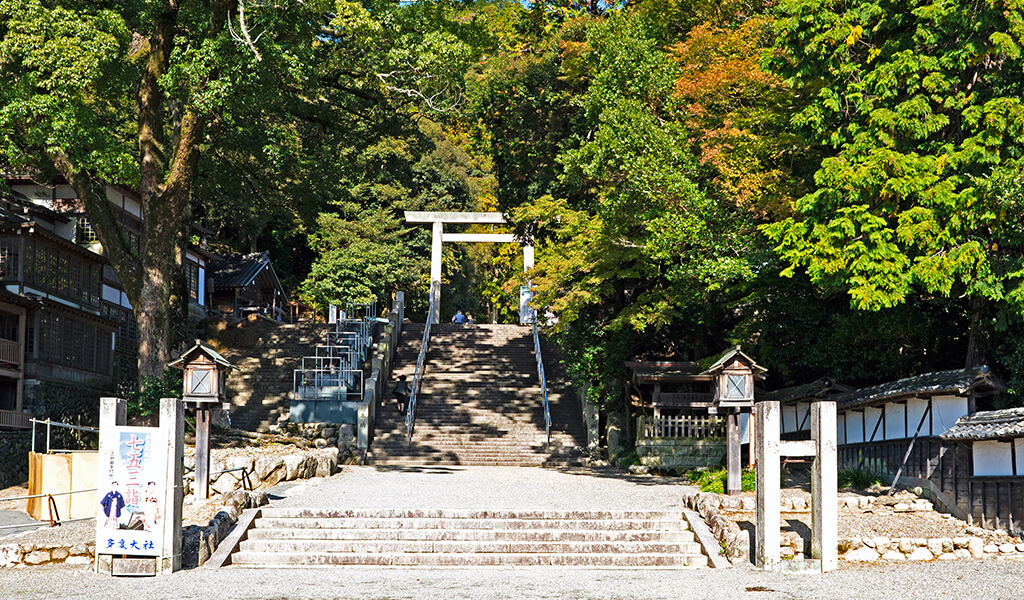
The journey begins at the Tado Taisha Shrine in Ninomiya in Ise Province, which sits in Kuwana City. About 20 minutes by car from Kuwana Station, you will see its majestic appearance at the foot of Mt. Tado, which is deep in greenery. As the chief deity of the Northern Ise region, Tado Taisha is also called the "Great Shrine of North Ise" and has earned the trust and respect of the local people.
The history of Tado Taisha dates back to the late 5th century, when it was founded during the reign of Emperor Yusaku. According to the legend, Mt. Tado was once inhabited by a one-eyed dragon, and the worship of the dragon god is the beginning of Tado Taisha. The legend of the dragon god suggests that Tado Taisha has been deeply associated with nature worship since ancient times.
In addition, Tado Taisha has a deep connection with the imperial family, and in 717 (Reigame 3), an anecdote is recorded in the "Continuation of Japan" that Emperor Motomasa washed his hands and face at the spring of Mt. Tado, and his skin became smooth and his pain was cured. To commemorate this event, it is said that the name of the company was changed to "Yoro", suggesting that Tado Taisha was recognized as a special existence by the Imperial Family.
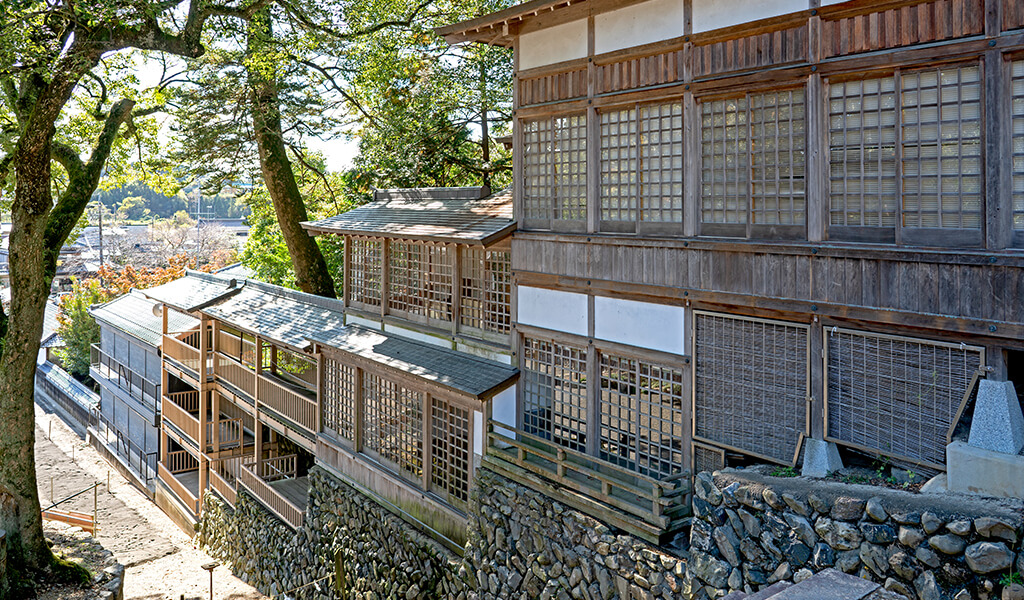
Tado Taisha is said to be the second shrine of Ise Province, but it has been pointed out that it may have been a de facto shrine due to its historical background, scale, and depth of faith. In ancient times, Mt. Tado, behind the shrine, was worshipped as a sacred mountain, and it is recorded that many bands and sacred stones existed on the slopes of Mt. Tado. These facts show that Tado Taisha played an important role as a center of ancient rituals.
In addition, since it enshrines Amatsu Hikone Mikoto, the ancestor god of Kuwana no Obito, a powerful clan that ruled this area, it has a deep relationship with Ise Jingu Shrine, and its importance can be seen from the fact that it was sung, "If you visit Ise, you will visit Otado.
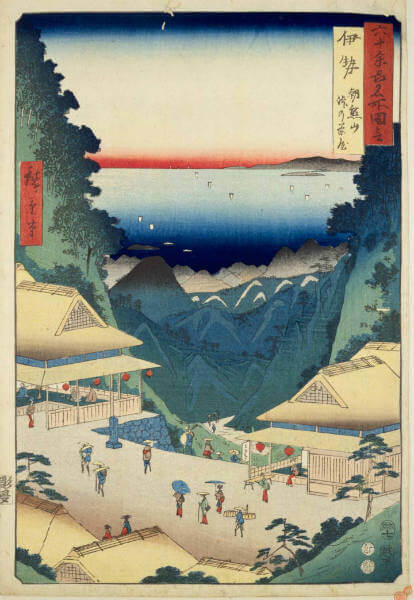
Utagawa Hiroshige "Sixty-odd Province Famous Places Chart" from "Ise Asakumayama Toge no Teahouse"
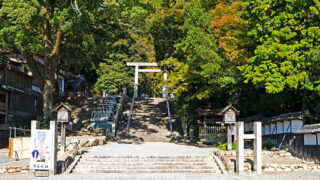
The precincts of Tado Taisha are surrounded by abundant nature, and every step is filled with a sacred air. When you climb the long stone steps, the first thing that catches your eye is the figure of the divine horse "Kinzan". The beautiful white body of the horse creates a divine atmosphere and attracts visitors.
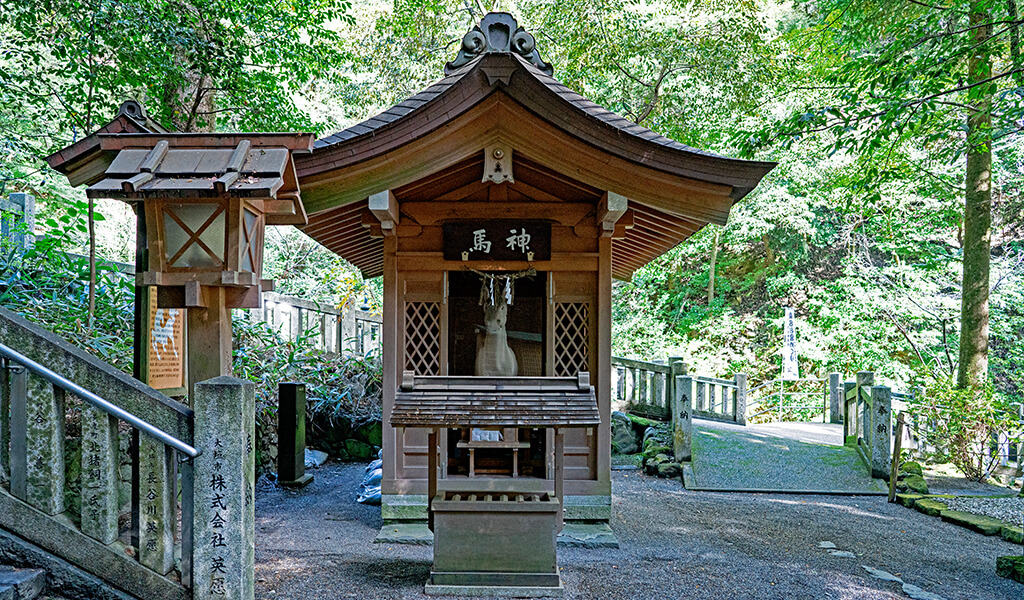
Mt. Tado has been deeply believed as a mountain where God has resided since ancient times, and people have prayed to it. The role of the messenger who delivers the wish to the gods is the white horse, which is said to have lived in the Tado Taisha shrine for 1,500 years. As there is a legend that the god descends on horseback, the relationship between the god and the horse is deep, and the raising horse shrine ceremony held at Tado Taisha is performed to predict the good and bad harvests of the year.
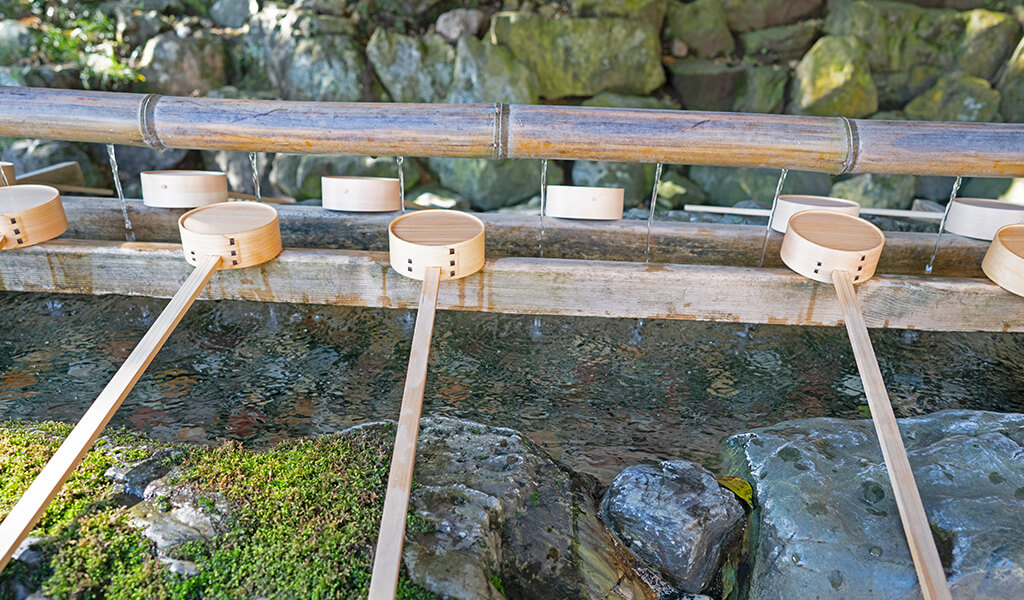
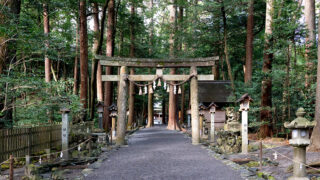
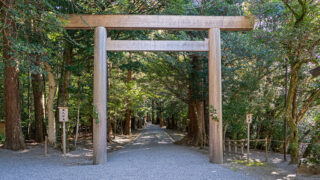
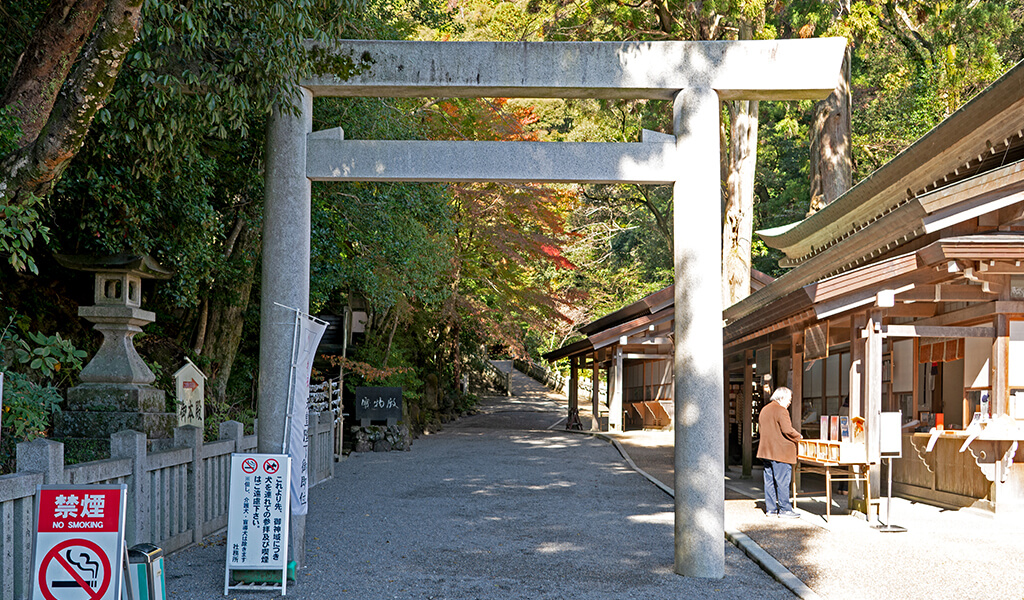
As you cleanse your body and mind in the water fountain and pass through the torii gate, the air becomes clearer and you are invited to a sacred space. In the temple grounds, a monument to Matsuo Basho stands quietly. The phrase "Miyajin, scatter my name, Falling Leaves" that Basho recited when he visited Tado Taisha in the second year of Genroku (1689) is engraved, and it conveys how Basho was touched by the natural beauty of Tado Taisha. This phrase was written in the graffiti of Basho when he visited the Tado Shrine with the Monjin Tanigi of Mino, and is also included in the haiku book Oinikkiki.
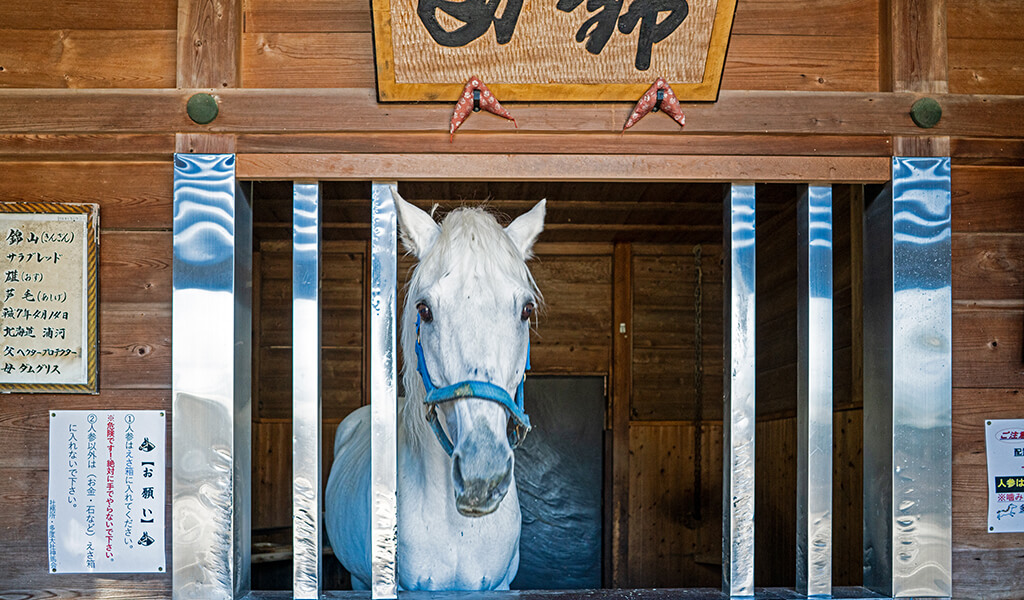
The white horse stable houses a white horse named after the legend of the white horse that has been handed down since ancient times. Horses are very strong-toothed animals, and "bruxism beans" are distributed and are popular with visitors.
In front of the thatched gate, there is the Bigozensha Shrine, which enshrines the life of Ichikishima Hime. Since ancient times, there has been a belief that God will bless diseases of the ear, nose, and mouth, as well as diseases peculiar to women, and many people come to worship by offering stones with holes in them and praying for the healing of diseases. In addition, it is popular because it becomes beautiful both physically and mentally when you visit it, and as the name suggests, it is a very beautiful shrine.
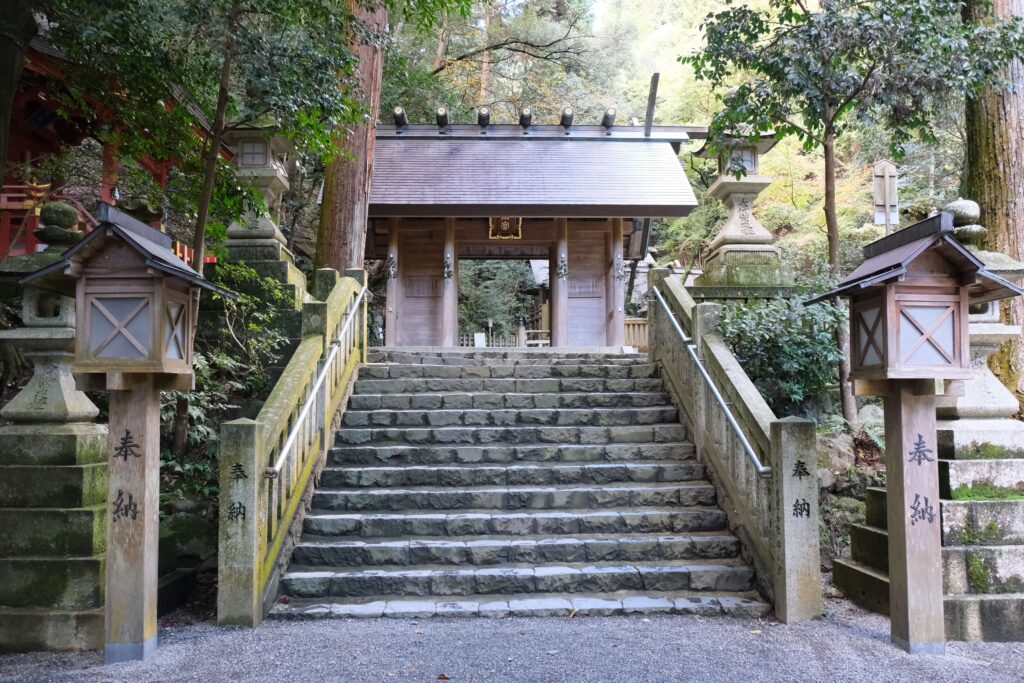
When you pass through the gate at the back of the torii gate, the thatched gate, you will enter the sacred area where the main shrine and the separate shrine are held. The greenery deepens, the sacred air flowing from the mountains is full, and the pure rivers flow, and the atmosphere is solemn and mysterious, worthy of being called a sacred area. I feel as if I have come to another world, isolated from the world below.
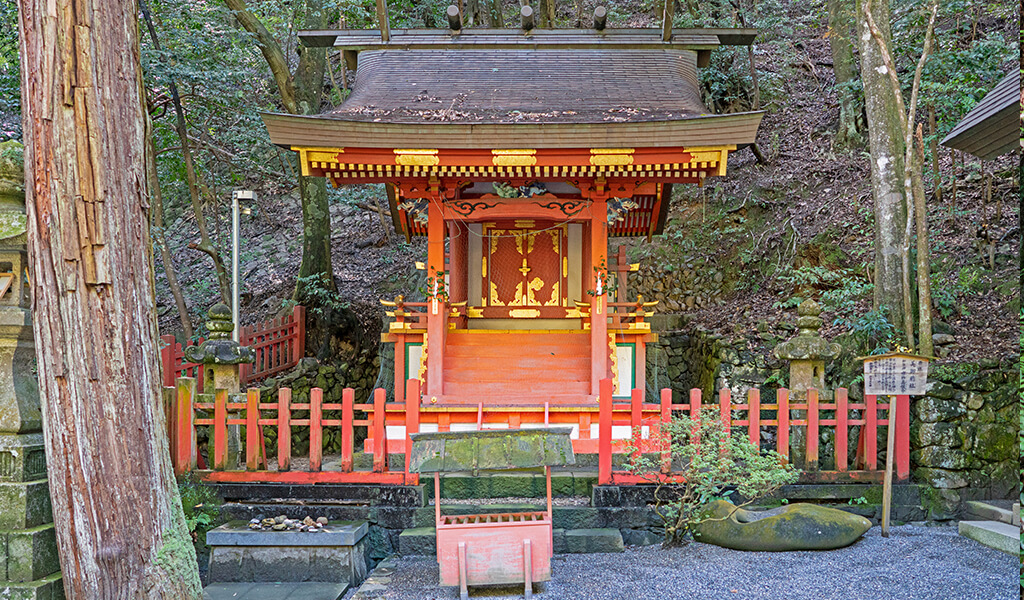
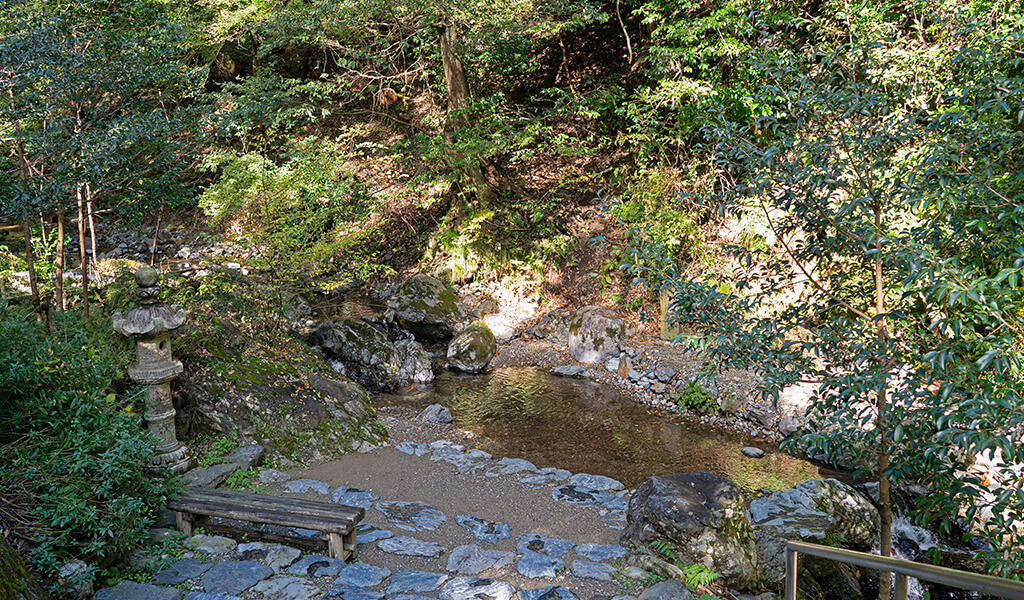
The Ochiha River, which has been a washroom since ancient times, cleanses the mind and body with a pure flow and welcomes people who go to worship with a sacred feeling.
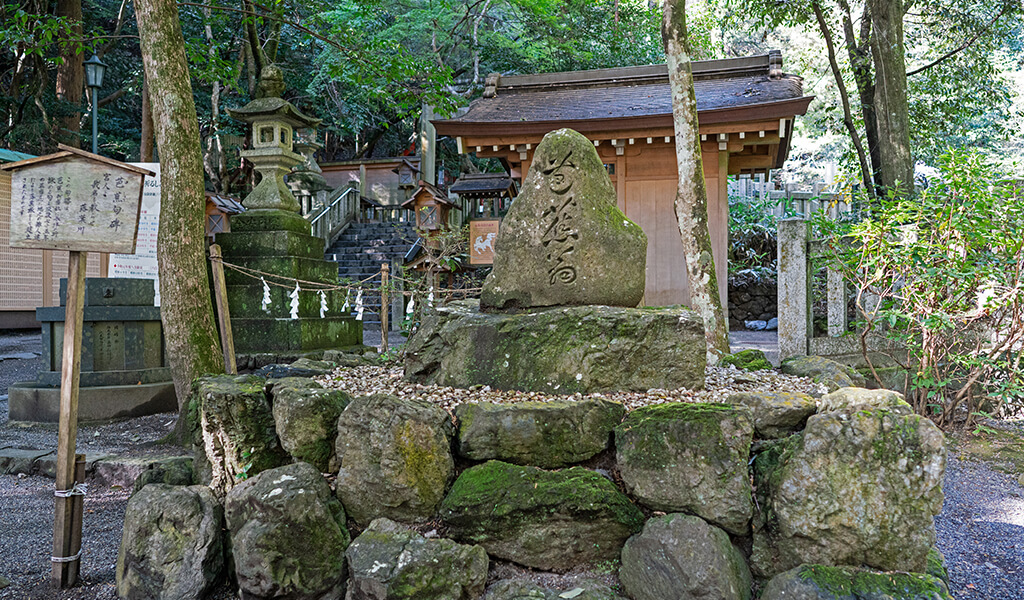
The shrine is dedicated to the ancestor god of the metal industry, "Ame-no-Ma-ichi Mikoto". As the god of ironmaking and goldmaking, Tenmu Ikkamei is deeply worshipped by people involved in the metal industry. Originally, he was a dragon god with one eye crushed, and in modern times, he has come to be practiced and identified with it.
In the main shrine, the life of Tianjin Hikone is enshrined. Tianjin Hikone has long been revered as a god who controls rain and wind, protects agriculture and fisheries, which are the source of life, destroys difficulties, and fulfills wishes.
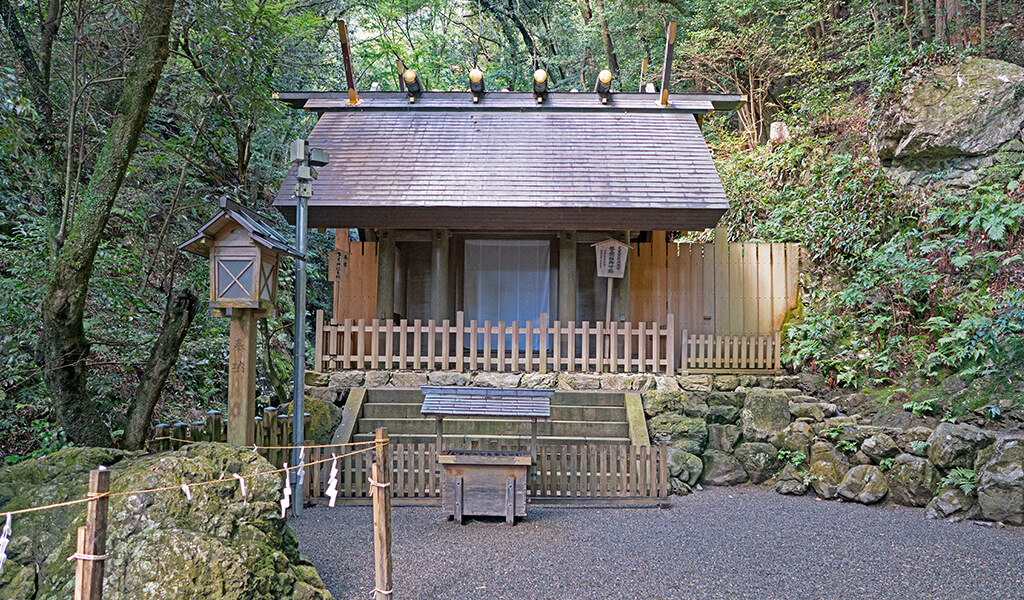
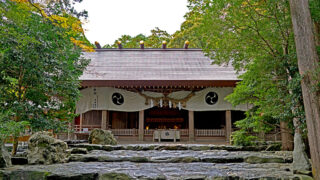
The main shrine of Tado Taisha has an unusual structure as a temple that does not have a door. This is said to symbolize that God is always close to people and treats everyone equally, as Tianjin Hikone is a being who controls rain and wind and brings blessings to people's lives.
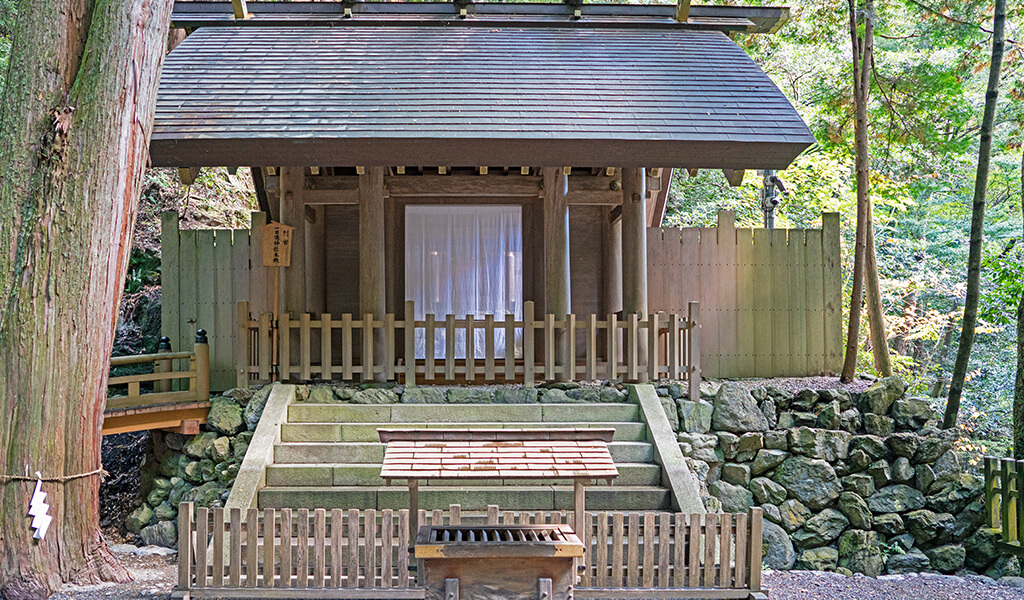
In addition, it is said that the gods of the main shrine and the separate shrine control the weather by joining forces, and prayers for rain and sunshine are also performed. There is also a belief that it sometimes becomes a dragon god and blesses the heavenly rain, and since ancient times, it has been a rare construction that "the temple does not have a door".
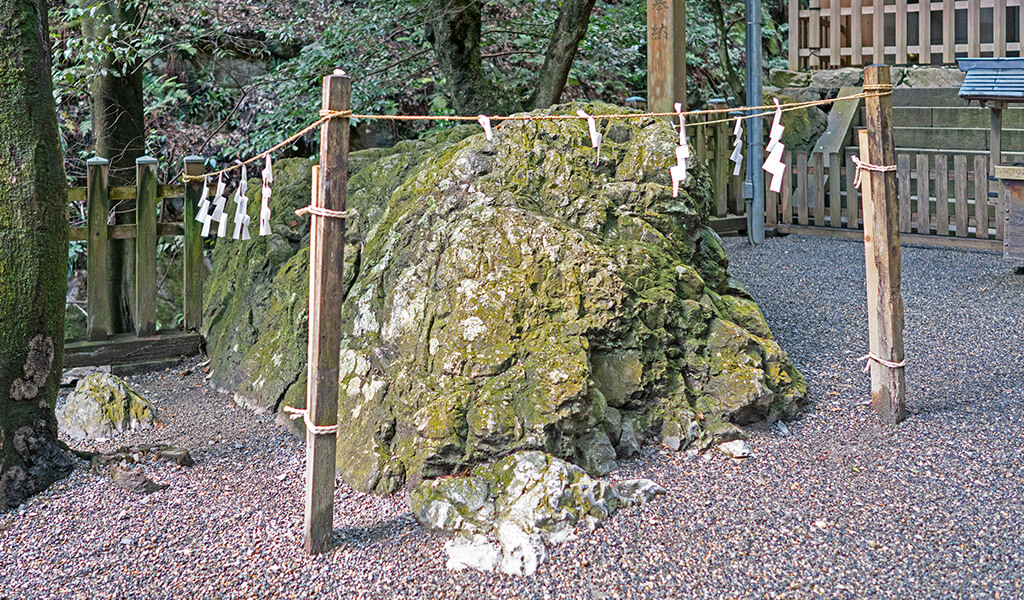
After visiting the shrine, I felt that God and human beings coexist in the same way as they did in the past. The temple, which had no doors, seemed to show that God was always close to people and treated everyone equally.
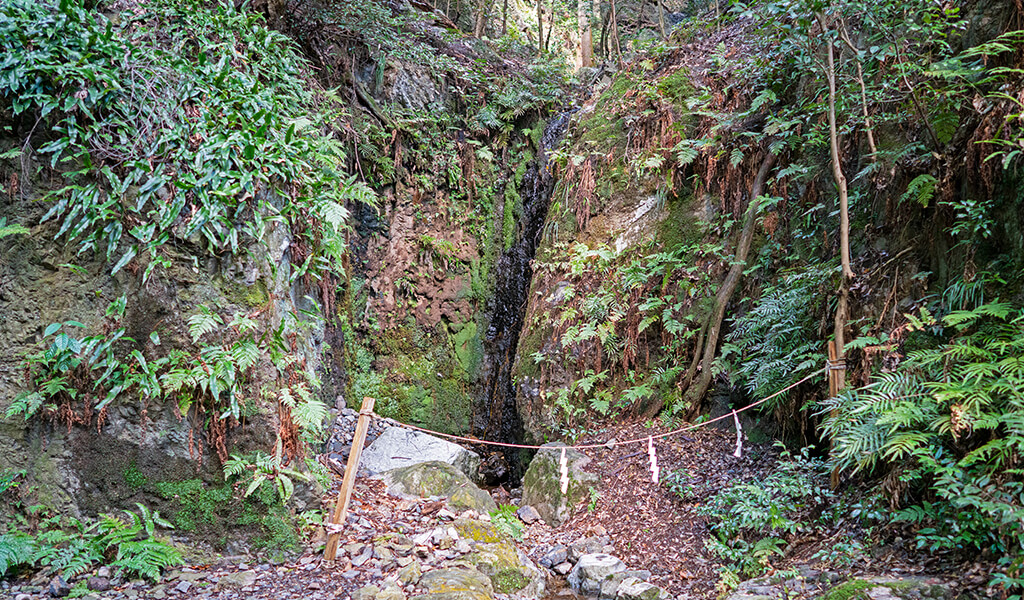
From the main shrine and the separate shrine, a refreshing and gentle sacred air flows, healing the hearts of visitors and giving them peace. Tado Taisha was a place where you could feel the breath of the gods and reaffirm the connection between God and people in harmony with nature.
Through this visit to Tado Taisha Shrine, I was able to come into contact with the beliefs that underlie Japan's spiritual culture, such as nature worship and Shintoism. In addition, I was able to feel the deep connection between the gods and the people, and I was able to have a valuable experience that enriched my heart. I felt that Tado Taisha is not just a tourist destination, but a sacred place, and it is such a special place that gives peace of mind and hope to those who visit it