The Mayan civilization continues to fascinate us with its advanced civilization and mysterious history, even among the ancient Mesoamerican civilizations. The rise and fall of the ruins, as well as the mysteries left behind by the ruins, continue to fascinate many people, not just historians and archaeologists. In this article, we'll delve deeper into the places where the Mayan civilization took place, the mysteries of its rise and fall, and the spiritual appeal of the ruins.
The Mayan civilization, its location and the mystery of its demise
The stage of the Mayan civilization: Diverse natural environments and city-states
The Mayan civilization flourished in an area that stretches across what is now southeastern Mexico, parts of Guatemala, Belize, Honduras, and El Salvador. This vast area was blessed with a diverse natural environment, including rainforests, plateaus, and coastlines.
Topography and climate
Blessed with tropical rainforests, fertile soil and abundant rainfall, the area was suitable for agriculture. At the same time, however, it was a harsh environment, with challenges such as dampness, disease, and dense forests.
In the higher plateaus, where temperatures were milder and drier, limestone was abundant and used as a building material.
It was possible to use the coastline and marine products, and it also played an important role as a trade route.
forest
Midori
Formation of city-states
The Maya civilization developed not as a unified empire, but as independent city-states competed and cooperated with each other. Each city-state had its own rulers, temples, and culture, forming a complex political structure. These city-states, while independent of each other, shared a common culture and religion.
Major city-states
Tikal is located in present-day Guatemala and is known as one of the largest cities of the Mayan civilization. There are still many huge pyramids and temples, and their grandeur is a masterpiece. In particular, the sight of huge pyramids such as Temples No. 4 and No. 5 symbolizing the power of the Mayan civilization.
Jesse
brown
Copan, located in present-day Honduras, is a city known for its exquisite sculptures. In particular, the hieroglyphs carved on the staircase and the carvings on the altar are regarded as masterpieces of Mayan art. Copán is an important place that shows the high artistry of the Mayan civilization.
Palenque, located in present-day Mexico, is a city characterized by beautiful architecture and sculptures. In particular, the temples of inscriptions and the carvings left in the royal palace convey the delicate aesthetic sense of the Mayan civilization. Palenque is also known as the "Jewel of the Maya" because of its elegant appearance.
eyebrow
me
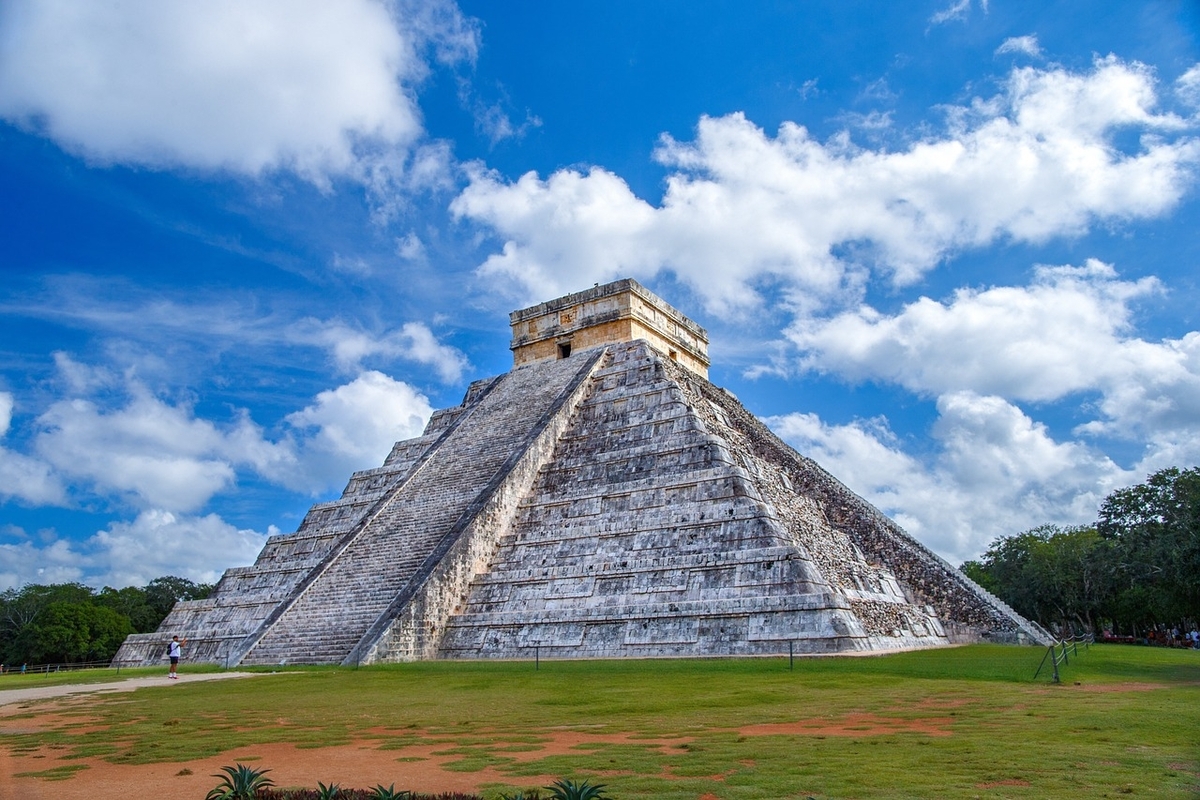
Chichen Itza, located in present-day Mexico, is famous for its magnificent pyramid "Castillo". In particular, the shadows of snakes descending on the steps of the pyramids, seen on the days of the spring and autumn equinoxes, suggest that the design incorporates knowledge of astronomy. Chichen Itza is a unique blend of Mayan and Toltec civilizations.
Calakmul is located in present-day Mexico and is a large city on a par with Tikal. The ruins of huge pyramids and temples have been preserved, and their vast scale speaks to the high level of city-building technology of the Mayan civilization. Calakmul is also known for having a rivalry with Tikal.
Emmy
george
Uxmal is a city located in present-day Mexico and is known for its unique architectural style called the Puuk style. In particular, the Governor's Palace and the Wizard's Pyramid are famous for their beautiful design. Uxmal conveys the advanced architectural techniques and artistry of the Mayan civilization to this day.
The prosperity of the Mayan civilization and the flowering of advanced knowledge and culture
Kazuhisa Fukutomi
The Mayan civilization built an advanced civilization for about 3,000 years. Its history can be roughly divided into the following three periods.
1. Preclassic period (c. 2000~250 BC) and the emergence of civilization
Cultivation of corn and beans began, and sedentary life began.
Formation of villages: Small settlements were formed, the foundations of social organization were laid.
Pottery manufacturing The first pottery was made, and the way of life gradually changed.
The Beginning of Religion Early religious views such as nature worship and ancestor worship were formed.
2. Classic period (c. 250~c. 900) and the height of civilization
The development of city-states: Large-scale city-states were formed, which became political, economic, and cultural centers.
Advanced building techniques and large-scale structures such as pyramids, temples, and palaces were built.
Astronomy, mathematics, and calendars were developed, and precise astronomical observations were made to create accurate calendars. The Mayan calendar had a complex system that combined a 260-day calendar and a 365-day calendar. In addition, advanced mathematics using the base 20 system was also developed.
Development of hieroglyphs (hieroglyphs) He developed his own hieroglyphic system and recorded history, myths, and rituals.
Development of art ・ Highly advanced works of art such as stone carvings, earthenware, and murals were produced.
Trade was stimulated, long-distance trade routes were established, and products from all over the world gathered in the cities.
3. Postclassic period (c. 900~16th century), decline and change
The decline of city-states in the classical period, the city-states that flourished in the classical period declined and the population decreased.
The Rise of New City-States: New city-states have emerged, especially in the Yucatan Peninsula in the north.
The fusion of Maya-Toltec cultures, such as Chichen Itza, developed a unique culture that fused Mayan and Toltec cultures.
The Spanish invasion in the 16th century brought the Mayan civilization to an end.
The Fall of the Mayan Civilization and the Mysterious Decline
The Maya civilization, while boasting of its advanced civilization, experienced a massive decline at the end of the Classic period. Various theories have been put forward as to the cause of this decline, but no definitive conclusion has been reached.
Akane
flower
Influential Theory: Environmental Destruction
Forests have been cut down on a large scale due to the expansion of farmland due to deforestation and population growth, as well as the demand for building materials.
Due to soil erosion and the disappearance of forests, soil erosion has been eroded and fertility has decreased.
Drought and long-term drought have occurred, and agricultural production has plummeted.
Political turmoil
Wars between city-states and conflicts between city-states intensified, and wars became more frequent.
Internal strife and internal strife also occurred within the city-states, as well as power struggles and rebellions among the ruling class.
Social unrest, war, and food shortages have led to social instability.
Naomi
Pont
plague
Epidemics of infectious diseases and epidemics such as smallpox have caused a sharp decline in the population.
Weakened immunity and long-term food shortages have weakened people's immunity.
External aggression
Invasion of other peoples, other ethnic groups invaded and destroyed the city-state.
Destruction of trade routes Trade routes were disrupted, and the economy was disrupted.
It is believed that these factors were intertwined in a complex manner that led to the decline of the Mayan civilization. In recent years, the theory that environmental destruction was the most important factor has become prevalent.
Mayan Civilization Ruins: Spiritual Energy and Mystery
The ruins of the Mayan civilization are notable not only for their grand scale and exquisite architectural techniques, but also for their spiritual aspects. When you visit the ruins, you can feel the Mayans' view of the universe and religion, as well as their advanced knowledge and technology.
Ken
Spiritual Elements of Mayan Ruins
Midori
Astronomical Observation and Ephemeris
Astronomy and the Mayans accurately observed the movements of celestial bodies and created calendars. They saw the movement of celestial bodies as the will of the gods and used it for rituals and rituals.
It has a complex calendar system that combines the 260-day calendar (Tzolkin) and the 365-day calendar (Haab) to capture the rhythms of the universe and the cycles of nature.
Pyramids and energy
Accumulation of energy: There is a theory that the pyramids were not just structures, but also served as devices that collected and released the energy of the universe.
The pyramids, sacred places, were places where gods were enshrined and sacred spaces for performing rituals.
Jesse
brown
Temples and Ordinances
Prayer to the gods: The temple was a place to worship the gods and offer prayers.
Sacrifices, sometimes human and animal sacrifices, were offered, offering to the gods and praying for the blessings and prosperity of nature.
Hieroglyphs and mysteries
Hieroglyphs and Mayan scripts are made up of complex and mysterious hieroglyphs. These characters describe the history, mythology, and cosmology of the Mayans, and there are many parts that have not yet been deciphered.
The Mayan script was an important means of transmitting knowledge and culture to future generations.
eyebrow
me
Connection with the Universe
The Mayans emphasized the connection with the universe and believed that the position and movement of the stars had an impact on human destiny and society.
Cosmic order
They built a social structure that reflected the order of the universe and lived in harmony with nature.
When we visit the Mayan archaeological site, these spiritual elements give us new insights and inspiration as we live in the present day. Feeling the energy that dwells in the ruins and thinking about the ancient Mayan view of the universe will also lead to our own inner exploration.
The Mayan civilization is an ancient civilization that built an advanced civilization but died out in mystery. Its ruins are not only of historical value, but also of spiritual appeal. Unraveling the mysteries of the Mayan civilization is crucial for understanding human history, culture, and connection to the universe. A trip to the ruins of the Mayan civilization and experience its mysteries can also be a journey to explore our own inner world.
Born in Aomori Prefecture in 1965
Since childhood, he has been plagued by troubles, illnesses, and injuries caused by spiritual phenomena. However, one day at the age of 20, he participated in an event, had a strange experience at the venue, and received a lightning energy from heaven that seemed to pierce his brain and his spinal cord, and his psychic abilities blossomed. After that, he started researching psychology and psychic powers, and now he has combined psychic abilities and consciousness engineering. Established "Radionics Exorcism" with his own radionics technique. Beyond exorcism, memorial services, and healing, "it is possible to cure luck"