Your life, plus? Minus? Kinesiology test to quantify conscious energy
vibration
VIBRATION WORLD | 現代陰陽師 | スピリチュアルサイト
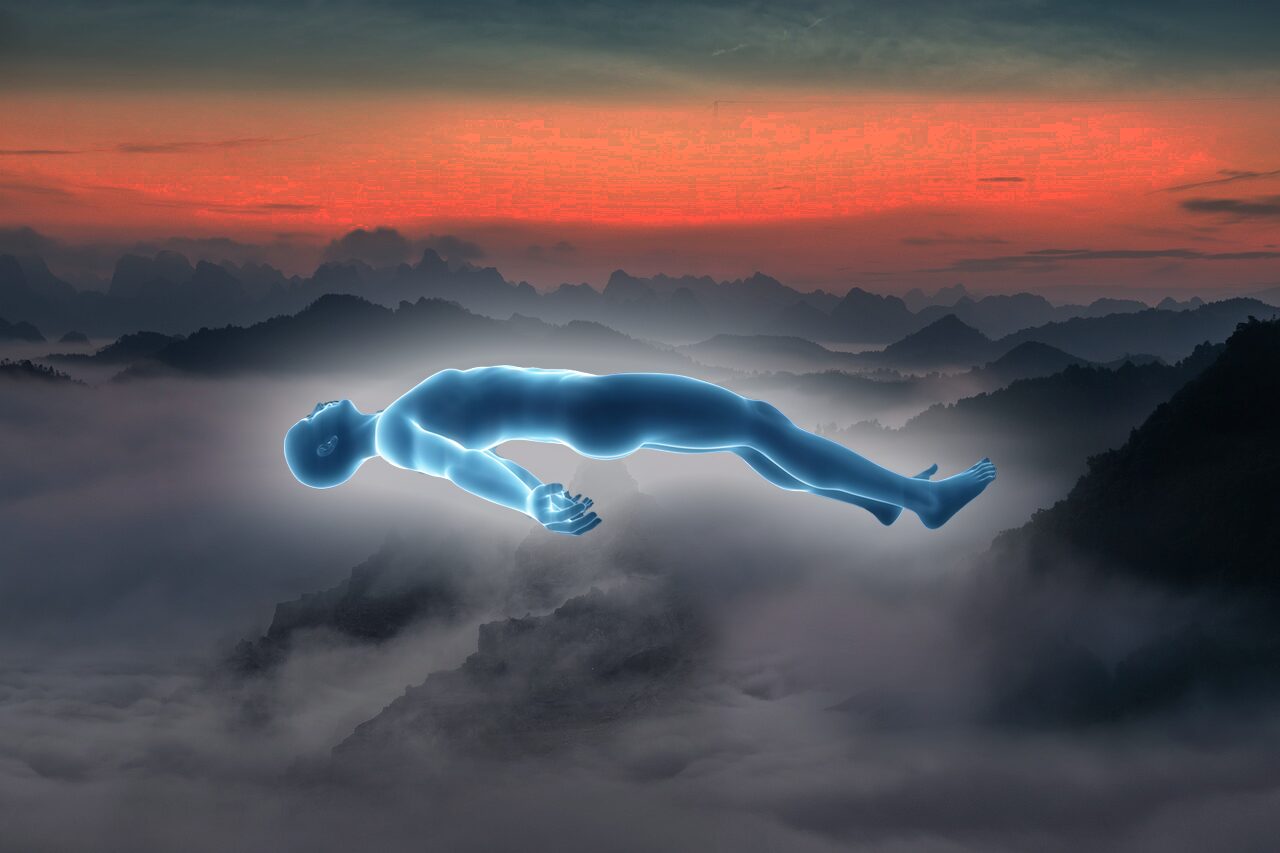
Since ancient times, humanity has found a special meaning on the line between life and death. In particular, the "Near-Death Experience" (NDE) told by people who have survived while wandering on the edge of death sometimes overturn our common sense and provide us with a deeper insight into the mystery of life. Is this mysterious phenomenon just an illusion of the brain, or is it a glimpse of the soul's journey? In this article, we will explore the multifaceted aspects of near-death experiences, from their definitions to scientific attempts to elucidate them, common patterns, and the changes in life outlook described by those who experience them.
Near-death experiences are a general term for phenomena that occur in the face of death and involve a change in consciousness. In medical terms, people who have been in danger of life due to cardiopulmonary arrest, serious trauma, or illness and have been subsequently resuscitated often report their experiences. Statistically, it is reported that between 4% and 18% of people experienced it among resuscitated people, and while their content is surprisingly diverse, it is known to have some kind of common pattern.
The reason why the term "near-death experience" has become widely known is probably due to the fact that research has flourished since the beginning of modern times. In particular, since psychiatrist Raymond Moody published his book Life After Life in 1975, his research has exploded. Researchers are paying attention to the fact that people who are close to death experience "seeing a dazzling light," "feeling deep peace," "reuniting with the deceased," and "feeling of detachment from the body (out-of-body)" that are commonly talked about across cultures and religions. These commonalities suggest that near-death experiences may have a more universal meaning than just individual hallucinations.
Near-death experiences have been studied as an interesting topic for many years from a medical and scientific perspective. Recent studies have shown that the brain does not completely stop functioning even in a state of cardiac arrest, but continues to be active for a short time. The possibility that this could be the cause of near-death experiences is one of the leading hypotheses. In particular, the latest study conducted in 2023 observed a sudden peak in electrical activity in the brain after cardiac arrest, the so-called "electric storm," which may be closely related to the phenomenon of near-death experiences. This electrical activity is said to occur in brain regions related to consciousness and memory, and it is thought that it may be behind experiences such as light perception and flashbacks of past memories.
It has also been confirmed that the hallucinogen DMT (dimethyltryptamine) causes a body sensation similar to a near-death experience, which is also one of the grounds for supporting the theory of chemical reactions in the brain. DMT is also called "the molecule that opens the door of the mind," and it has been suggested that it may be produced naturally in the brain under certain conditions. This raises the fundamental question of whether near-death experiences are caused by endogenous chemical reactions caused by the brain in extreme conditions, or whether consciousness is a phenomenon of another dimension that transcends the physical constraints of the brain.
There is a surprising commonality in the stories told by people who have had near-death experiences. A well-talked about process begins with an "out-of-body experience" in which you leave your body and look down from above. Next, it is reported that you will be struck by the sensation of passing through a "tunnel of light" at high speed in the dark. This tunnel is sometimes described as a whirlpool, and at the end of it, it is said that you will experience a beautiful light that cannot be expressed in words and a feeling of being surrounded by unconditional love.
In addition, there are many reports of reuniting with deceased relatives and close friends, or interacting with unknown beings called "beings of light". It is said that this reunion is warm and nostalgic, and that it is enveloped in a deep sense of security and happiness that "we have met again." In addition, it has been reported that "flashbacks of life" occur in which all the things you have lived, good and bad, and the influence you have had on others instantly cross your mind. These flashbacks are not just a replay of memories, but a profound insight into the "meaning" of those events and the simultaneous understanding of all of the effects you have had on others. These processes are common to many people who experience them, regardless of culture or religion, and have been watched by scientists and spiritual explorers as the key to understanding what near-death experiences are.
Near-death experiences can vary subtly depending on the culture, religion, and region. For example, in Christian cultures in Europe and the United States, there is a tendency to compare "beings of light" to God, Christ, and angels, and to be reunited with deceased family members and pets. On the other hand, in the East, especially in regions with Buddhist backgrounds, visions of the Pure Land, bodhisattvas, and guardian deities are sometimes discussed. In addition, the gate to the afterlife is often depicted as a "tunnel of light" in the West, while in the East it is sometimes described as a "bridge" or a "river of three ways" (for example, a river of three ways), suggesting that these are influenced by cultural views of life and death and mythological systems.
However, despite these cultural differences, there is a surprising commonality in the essential elements. Universal experiences such as the sensation of separation from the body (out-of-body), deep peace without pain, dazzling bright light, and the feeling of being surrounded by unconditional love are commonly reported across cultures. This universality may suggest that near-death experiences are not just cultural constructs, but phenomena that concern the roots of human consciousness and life.
The debate over whether near-death experiences are a real phenomenon or just dreams and hallucinations created by the brain has been and continues to be heated for many years.
Some scientists who support the hallucination theory argue that near-death experiences are only the "last activity" of the brain when it is close to death. For example, it is known that a lack of oxygen in the brain (hypoxia) causes visual light flashes and tunnel-like experiences. It has also been pointed out that the release of neurotransmitters such as endorphins and serotonin in the brain may produce phenomena such as happiness, out-of-body feelings, and time distortion. In addition, the similarity to the experience with the hallucinogen DMT also reinforces the view that near-death experiences are due to chemical and physiological processes in the brain. From these perspectives, near-death experiences are phenomena that depend solely on the functioning of the body, and are not evidence of the afterlife or the independence of the soul.
On the other hand, there is a persistent view that near-death experiences cannot be explained by mere dreams or hallucinations. There have been several reports of patients who have accurately reported events that occurred outside their bodies during cardiopulmonary arrest (e.g., the conversations and actions of medical staff performing resuscitation measures) after resuscitation, which are called "veridical NDEs." These examples suggest that consciousness may exist independently of the body and receive information beyond the five physical senses. From a spiritual perspective, near-death experiences are seen as strong evidence of the afterlife, the independence of consciousness, and the existence of the soul. As such, near-death experiences continue to attract debate from both scientific and spiritual perspectives, and their essence is still shrouded in many mysteries.
The stories told by near-death survivors have surprising similarities that transcend cultures and personal backgrounds. These patterns suggest that near-death experiences may be based on some kind of universal mechanism, rather than just individual hallucinations.
Many people who talk about near-death experiences have in common the experience of being surrounded by a "beautiful light" that is difficult to express in words. This light is brighter than any known light source on earth, but it is said that it never causes pain to the eyes, but rather envelops the viewer and gives a deep and serene peace. Many people who have had near-death experiences say that touching this light fills their hearts and feels a deep sense of happiness and unconditional love that they have never felt before. Some people who have experienced it have described it as "as if the soul had returned home," and this feeling may symbolize a state of peace and security that transcends the body. This light is often perceived as a "being of light" with a personality and is reported to convey messages full of wisdom and compassion.
One of the most commonly reported elements of a near-death experience is the phenomenon of "going through a tunnel." This tunnel is considered to be dark and long, and the experiencer feels that he is moving at high speed through it. As you approach the end of the tunnel, it is common for bright lights to come into view. And many people talk about their experiences of reuniting with relatives, close acquaintances, or beloved pets who have already passed away.
This reunion, unlike a goodbye in the real world, is very warm and nostalgic, and is reported to be full of deep affection and understanding. The experiencer feels that "they came to pick me up" and "I understood everything without exchanging words." This phenomenon symbolizes a unique state of consciousness that occurs between life and death, suggesting that death may not be a mere annihilation, but part of a universal connection. These reunions are often said to provide deep healing and hope for the afterlife to those who experience them.
Among near-death experiences, it is also very common to have flashbacks of one's life in an instant. In this phenomenon, the journey from birth to the present, important events in life, joys and sorrows, successes and failures, and even unconscious memories are brought back vividly all at once, as if they were panoramic or holographic images.
But it's more than just replaying memories. What's interesting is that you can deeply understand the "meaning" of your actions at that moment, especially the positive and negative effects you have had on others, as if you were reliving them from their point of view. This is sometimes referred to as a "review of life" and is accompanied by a sense of satisfaction with good deeds and deep reflection and self-awareness of mistakes. Through these reflections on their lives, many people who have had near-death experiences have found new values and grown as human beings. It is an opportunity to re-examine our connection to others and the world from a self-centered perspective in a broader way.
One of the most significant changes that people who have had near-death experiences have in common is that they experienced a feeling of complete disappearance from their fear of death during the experience. They are freed from the anxiety and anguish they feel in their daily lives, and they are said to be enveloped in deep peace and peace in their hearts. Many survivors say that they have been able to experientially understand that death is not a terrible thing, but rather a natural, beautiful, and new beginning.
This sense of peace has an immeasurable impact on the near-death experiencer's outlook on life. When they are no longer afraid of death, they are less bound by material needs and social evaluations, and more value spiritual values and relationships. Being free from the fear of death has led many people to live their lives more freely and independently, and there is a tendency to take on bold challenges and make heartfelt choices. This deep sense of peace is an important factor in enriching the lives of near-death experiencers.
In reports of near-death experiences, as mentioned above, there are a surprising number of common elements that transcend cultural and religious differences. Beautiful lights, tunnels, reuniting with the dead, flashbacks of life – scientists have a variety of hypotheses as to why these visions occur in a way that is similar to that of many people.
One theory is that when the brain is in an extreme state, certain physiological and psychological processes may universally work to trigger these experiences. For example, a lack of oxygen in the brain stimulates the visual cortex to produce the perception of light, and endorphins released by stress can bring a sense of peace and euphoria. It has also been pointed out that something like the collective unconscious common to all human beings (the archetype proposed by Jung) may manifest as a universal image in the face of death.
On the other hand, there are those who believe that these universal experiences teach fundamental truths about life and the afterlife. They argue that near-death experiences are evidence that consciousness exists independently of the brain and can operate in areas beyond the physical body. This shared vision of near-death experiences hides the mysteries of life that have yet to be unsolved, and their unraveling has the potential to profoundly change our understanding of consciousness and existence.
Near-death experiences are located at the intersection of the two realms of science and mystery, and the debate over their essence is always active.
Although it is recognized that a near-death experience is a phenomenon experienced when a person is revived from cardiopulmonary arrest or a near-death state, there is a lot of debate over its nature. Some scientists argue that near-death experiences are nothing more than hallucinations caused when the brain is in an extreme state. The main grounds in support of this theory are as follows.
Thus, there is a view that near-death experiences are a phenomenon caused by brain function, and not evidence of out-of-body experiences or afterlife. Skepticism also points out that the vagueness of memories after resuscitation, as well as personal expectations and cultural context, can shape the content of the experience.
On the other hand, there are attempts to apply the concept of quantum mechanics, which is the most advanced theory of modern physics, to elucidate near-death experiences. One way of thinking that is attracting attention in the field of quantum mechanics is the hypothesis that consciousness can exist at the quantum level.
In particular, the "Orchestrated Objective Reduction (Orch OR) theory" proposed by British physicist Roger Penrose and anesthesiologist Stewart Hameroff discusses the possibility that microtubules, which are the structure of microscopic proteins in the brain, have the function of processing quantum information that is the source of consciousness. According to this theory, consciousness is formed not only by neuronal activity in the brain, but also by quantum processes in microtubules.
This theory relates to near-death experiences as follows: It has been hypothesized that when an extreme situation occurs, such as when the oxygen supply in the brain is stopped during near-death, the quantum coherence in the microtubule collapses and consciousness is released from the physical body. Then, when brain activity is restored by resuscitation, the released consciousness returns to the microtube and is remembered as an experience. This way of thinking goes beyond the simple explanation that near-death experiences are mere hallucinations and offers a new perspective on the origins of consciousness and the very structure of the universe. However, this theory is still only a hypothesis, and further scientific progress is needed to verify it.
Recent medical research has focused on brain activity shortly after death, shedding great light on the mechanisms of near-death experiences. In a 2023 study, a sudden peak in electrical activity of brain waves associated with conscious cognitive activity, called "gamma waves," was observed in the brain after cardiac arrest, and it was pointed out that this may be related to the phenomenon of near-death experiences. This phenomenon is considered to be a "trace of conscious activity" and is understood to be the last activity of the brain to maintain its function for a few seconds to a few minutes after death, or to reprocess past memories and information.
It is also thought that this brain activity is associated with "out-of-body experiences" in which patients in similar conditions describe memories of looking down on their bodies from outside the body. As medicine advances, some of the near-death experiences that were previously difficult to understand are gradually being explained within a scientific framework. However, more research is needed on the causal relationship between whether these brain activities are the "causes" of near-death experiences, whether near-death experiences "affect" brain activity, or whether the two interact with each other.
Near-death experiences have been talked about in many traditions and scriptures since ancient times as a subject of great significance in the religious and spiritual worlds. Many religions mention the afterlife or the existence of the soul, and near-death experiences can be seen as some kind of evidence affirming it, or even a dry run for a journey after death.
For example, it is not uncommon for the "beings of light" described by many experiencers to be compared to gods, angels, Buddhas, or guardian spirits in certain religions. In addition, the feeling of reuniting with the deceased in the afterlife and the experience of looking back on one's life are deeply connected to faith, as they suggest a connection beyond life and death, reincarnation, and the existence of an afterlife. There are also texts, such as the Tibetan Buddhist "Book of the Dead," which describe in detail the transformation of consciousness in the process of death, and have many similarities to near-death experiences.
These elements are seen as alleviating the fundamental fear of death and giving people spiritual salvation and hope. Near-death experiences are not just personal events, but have a special significance in religion and the spiritual world, as a guidepost that leads to the search for universal spiritual truths common to all mankind. It is an opportunity to deepen the awareness that human existence is part of a larger network of consciousness beyond the physical body.
The debate over near-death experiences takes place at the intersection of two seemingly opposing domains: science and spirituality. From a scientific point of view, there is a movement to interpret near-death experiences based on brain functions and chemical processes, while from a spiritual point of view, there is a movement to preserve the mystique of near-death experiences as evidence of the existence of the afterlife and the existence of the soul.
Recently, however, there have been more and more cases where the two sides are not only at odds but also trying to reach a compromise. For example, while emphasizing the psychological and spiritual significance of near-death experiences, integrated research is being conducted to deepen the understanding of the brain science behind them. It is an approach that seeks to understand the full scope of the complex phenomenon by collaborating with multiple disciplines such as psychology, neuroscience, religious studies, and philosophy to analyze near-death experiences from multiple perspectives.
This collaborative attitude opens up the possibility of a wider and deeper understanding of the multifaceted meaning and value of near-death experiences. Science may help us understand the "how" of phenomena, while spirituality may complement each other and deepen our understanding of our existence by exploring the "why" and "meaning" of phenomena. Near-death experiences have the potential to be a rare key link between these two worldviews.
For many people, near-death experiences are not just magical events, but have such an impact that they can fundamentally change their outlook on life and values. It is said that those who look into the abyss of death and survive often begin to walk in a "new life" as if they were reborn.
Many people who have had near-death experiences say they have gained a new perspective on even the smallest things in their daily lives. They develop a deep appreciation for the things they used to take for granted, such as the daily activities, the beauty of nature, the contact with family, and the conversations with friends. "The preciousness of living" and "cherishing the present moment" are not just slogans, but you will be able to feel them from the bottom of your heart. Many of them let go of their previous attachment to material pursuits and social success, and instead focus on spiritual wealth and the depth of their relationships. Many people change careers to devote themselves to volunteering or find joy in serving others. It's as if you're living a "second life," your priorities in life change drastically, and you start to feel the value of your "new life" strongly.
Many people who have had near-death experiences have stated that their fear of death was completely relieved or even completely extinguished during the experience. We come to see death not as a mere end, but as a natural process of consciousness moving beyond the body to another dimension, or as something that entails a universal sense of peace.
This "heart that is not afraid of death" has an immeasurable impact on their lives. Being freed from the fear of death allows them to live their lives independently without fear. There is a greater tendency to take bold challenges and make heartfelt choices without fear of risk. It can be said that you will act according to your inner voice without being influenced by the judgment of others or social pressure, which will drive you to live a more creative and fulfilling life. They try to make the most of the time they have left in their lives and live for what is truly valuable.
Near-death experiences are not uncommon for people to fundamentally change their philosophical views on life and death. Many people who have experienced it feel a renewed awareness of the meaning of life and the conviction that death is not the end of life. They come to feel that life is not just a product of chance, but something with a deep purpose and meaning. These experiences provide new insights into the purpose of life, the depth of human existence, and the immortality of consciousness.
It also often reminds me of how important love and service to others are. In the review of life, the experience of seeing the glow of the acts of love they have done and the pointlessness of feelings of resentment and anger reminds them of the universal truth that "love is everything." This philosophical transformation has a profound impact on the way they interact with each other and the way they interact with society, leading them to a more empathetic and altruistic way of life.
In many cases, near-death experiences can lead to a reassessment and deepening of our connection with others. Through interactions with "deceased family members" and "strange beings of light" encountered during near-death experiences, the experiencer reaffirms the importance of the invisible but strong connection that exists between himself and others. It is rooted in a sense of oneness on a soul level and a sense that everything is interconnected.
Based on these feelings, survivors will value more time with family and friends after survival, tolerate minor conflicts and conflicts, and value empathy and understanding on a deeper level. They learn deeply about the importance of "unconditional love" in relationships and strive to apply the lessons in their daily lives. By avoiding conflict, begging for forgiveness, and giving, we aim to strengthen our bonds with those around us and build harmonious relationships.
There are many stories of people who have gone through near-death experiences and have realized the miracle of life itself. Having experienced death up close and returning to the light of life gives us a sense that being alive itself is an irreplaceable miracle and a gift. This realization is an opportunity for those who experience it to change their outlook on life, and brings them a sense of gratitude and happiness for living.
In our daily lives, we often overlook the preciousness of life. However, the near-death experiencer reaffirms the miracle every time he breathes, every time his heart beats, and every time he feels the world with his five senses. It becomes a source of spiritual enhancement and deepening of inner peace and joy. To know the finiteness of life and to find infinite possibilities and beauty in it. This is one of the most significant aspects of a near-death experience, and it reminds us all of the importance of living in the present moment.
Near-death experiences are not yet fully scientifically understood, but their existence continues to raise fundamental questions about life, consciousness, and the afterlife. As we deepen our exploration from the scientific and spiritual realms, we hope that the full extent of this mystical experience will be revealed, deepening and enriching our understanding of our own existence.